
Why Manufacturers Must Replace Email and Excel with Modern Dashboards
September 8, 2025
In today’s fast-moving manufacturing world, speed isn’t a luxury—it’s survival. Every defect left untracked, every delayed escalation, and every missed opportunity to fix a problem erodes margins and customer trust. Yet many factories still rely on email and Excel for problem reporting and resolution.
While these tools once felt adequate, they simply cannot keep up with the complexity of modern operations. Manufacturers need problem solving software and real-time manufacturing dashboards that make issues visible and actionable the moment they occur.
The Hidden Cost of Using Email and Excel
On the surface, email and Excel seem harmless. They’re familiar, low-cost, and easy to set up. But beneath that simplicity lies a series of hidden costs that eat away at productivity and profitability.
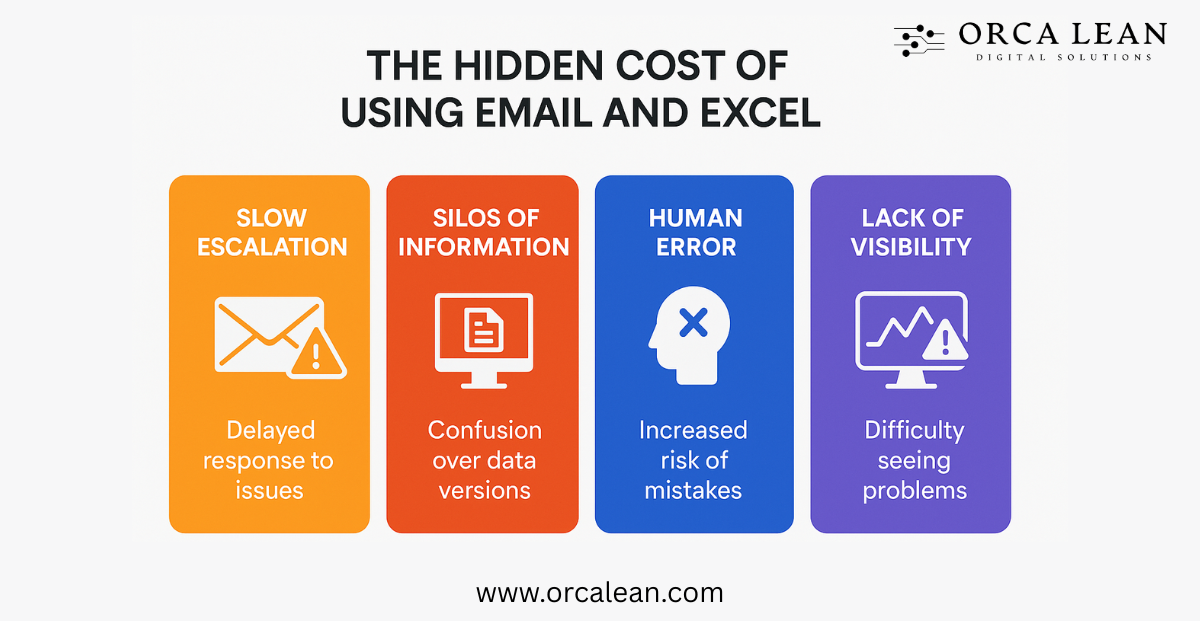
- Slow Escalation - When a machine breaks down or a defect is spotted, time matters. An email request for support often gets buried in inboxes, delaying response. Meanwhile, production losses accumulate. A digital tool to track defects eliminates this lag by alerting the right person instantly.
When escalation is delayed, defects spread silently across shifts. That’s why many plants adopt digital quality inspection apps to ensure faster, mobile-first defect reporting.
- Silos of Information - Excel spreadsheets live on individual desktops, in cloud folders, or as multiple “versions” circulating by email. This creates confusion about which version is correct. In contrast, KPI dashboards centralize data so leaders and operators work from the same source of truth.
- Human Error - Manual entry increases the risk of mistakes—whether that’s a wrong timestamp, misreported scrap numbers, or missing escalation details. These errors compromise the quality of decision-making.
- Lack of Visibility - A plant manager scrolling through emails or opening multiple Excel files can’t see what’s happening in real time. Without visibility, corrective action always lags behind. A manufacturing dashboard gives leaders instant clarity into which line, cell, or product is at risk.
The hidden costs of email and Excel aren’t just administrative—they translate directly into missed throughput, higher scrap, and dissatisfied customers.
Why Speed Matters in Problem-Solving?
Manufacturing is a race against time. Whether it’s a defective batch or an unexpected machine stoppage, the longer a problem lingers, the more expensive it becomes.
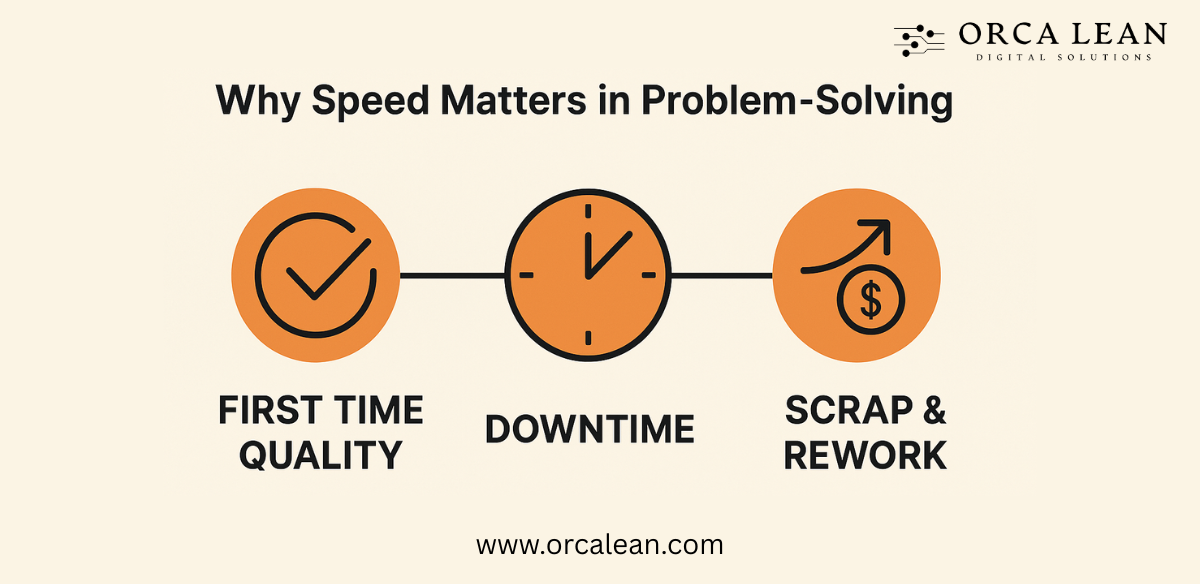
- First Time Quality (FTQ) directly affects customer trust. If a defect isn’t tracked at the source, it risks reaching the customer.
- Downtime escalates quickly—a few minutes lost per shift adds up to hundreds of hours annually.
- Scrap and rework multiply costs, often more than doubling the expense of an issue that could have been resolved upstream.
Operators on the shop floor are often the first to see problems. But if they must email supervisors or log details into spreadsheets, the opportunity for immediate action is lost. Lean principles—from Toyota’s andon systems to modern continuous improvement tools—stress instant feedback loops. That’s where problem solving software and digital tools to track defects step in, turning detection into action without delay.
The Breaking Points of Email and Excel
Despite their widespread use, email and Excel hit a breaking point in modern manufacturing.
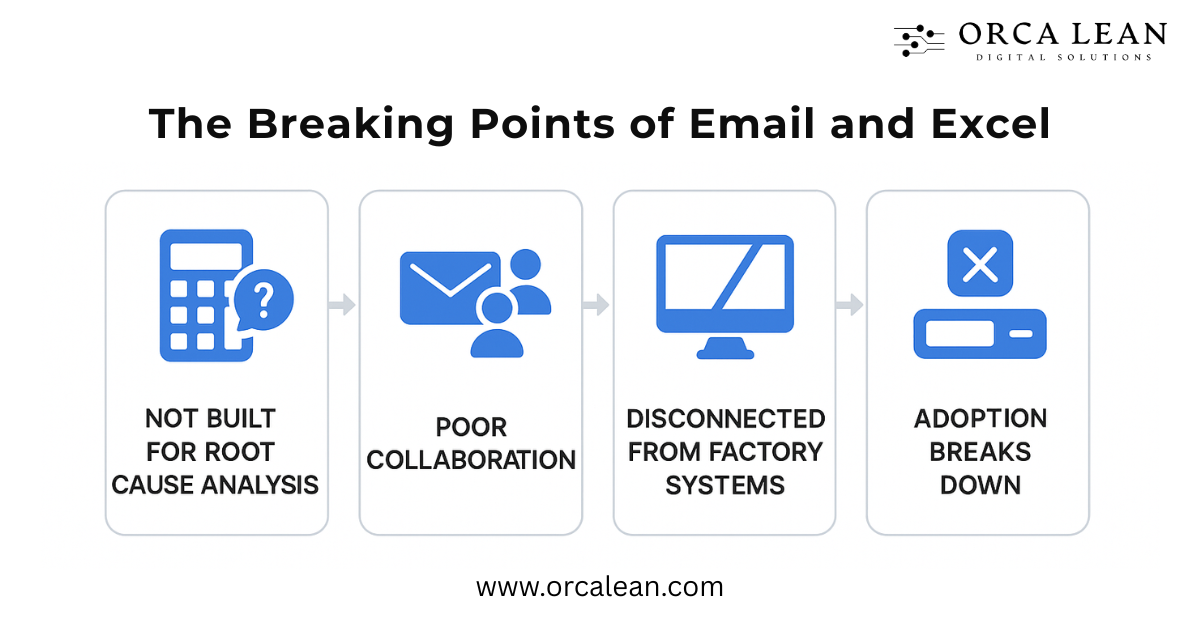
1. Not Built for Root Cause Analysis
Excel can capture numbers, but it doesn’t guide teams through structured methods like PDCA, DMAIC, 8D, or 5 Whys. Manufacturing thrives on these frameworks, and without them, problem-solving is inconsistent and shallow. Software to track defects provides templates that enforce discipline and standardize the process across teams.
2. Poor Collaboration
Email chains are notorious for excluding the wrong people—or including too many. Updates get lost, attachments go unread, and knowledge stays fragmented. A manufacturing dashboard makes collaboration visual and transparent. Everyone sees the same issue, status, and corrective action plan in real time.
3. Disconnected from Factory Systems
Excel and email don’t integrate with MES, ERP, or KPI dashboards. As a result, defect data lives in a silo, disconnected from production schedules, inventory, or financial metrics. Modern manufacturing software bridges this gap by linking problem-solving to operational data.
4. Adoption Breaks Down
On a busy shop floor, operators won’t tolerate extra paperwork. If reporting an issue feels like extra work, they simply won’t do it. Tools must be operator-centric—simple, mobile-first, and visual. Email and Excel fail this test.
When you add these breaking points together, the picture is clear: email and Excel aren’t just outdated; they actively slow down improvement.
What Modern Manufacturers Really Need?
Manufacturers don’t just need software—they need systems designed for speed, visibility, and discipline.
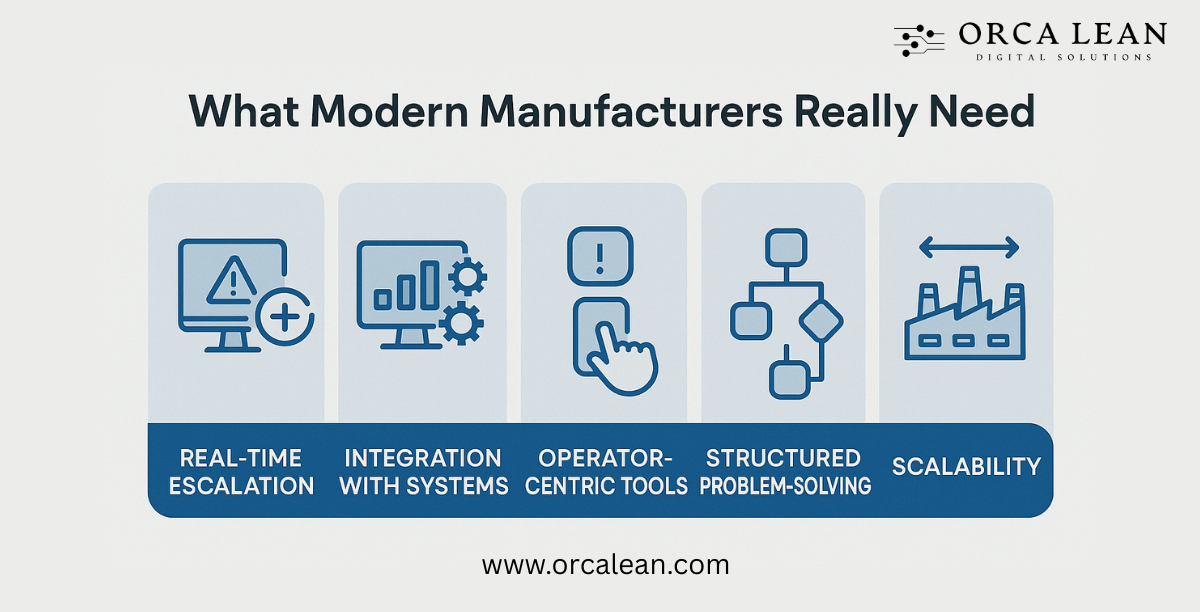
- Real-Time Escalation Systems - When a defect is found, it must be visible instantly. Modern tools send alerts directly to the right team, with no delays or inbox hunting.
- Integration with Manufacturing Systems - KPI dashboards that connect with ERP, MES, and quality systems ensure defect tracking isn’t isolated—it becomes part of the larger factory performance picture.
- Operator-Centric Tools - Frontline workers need to raise issues in seconds, not minutes. Mobile apps, visual workflows, and one-tap escalation make reporting natural and intuitive.
- Structured Problem-Solving Built In - Tools must support root cause analysis, corrective actions, and preventive measures within the same environment. No need to juggle templates in Excel.
- Scalability Across Plants and Shifts - A single version of the truth is critical for multi-site manufacturers. Modern problem solving software standardizes defect tracking across plants, ensuring consistency.
With these capabilities, manufacturing software transforms problem solving from a reactive, email-driven exercise into a proactive system of continuous improvement.
Case Example: From Chaos to Clarity
Consider a U.S. automotive supplier that relied on email and Excel to track quality issues. Operators spotted recurring defects on Line 2, but reports sent via email often went unnoticed for days. Excel sheets tracking scrap were riddled with outdated entries.
The result: defects reached customers, rework soared, and management struggled to understand root causes.
When the company adopted manufacturing dashboards and digital tools to track defects, the transformation was immediate:
- Defects were logged by operators in real time through tablets.
- Issues appeared instantly on plant-wide dashboards, visible to supervisors.
- Root cause analysis templates ensured structured resolution.
- Within six months, scrap costs dropped by 18% and FTQ improved by 12%.
This story illustrates the difference between managing problems with spreadsheets versus solving them with modern manufacturing software.
Conclusion
Manufacturing today is too fast, too complex, and too unforgiving for outdated tools. Email and Excel might capture data, but they cannot track defects, enable collaboration, or drive structured problem solving at the speed required.
The future lies in KPI dashboards in manufacturing, and problem solving software that make problems visible, actionable, and measurable in real time. With the right digital tools to track defects, factories not only reduce downtime and scrap but also build resilience, trust, and profitability.
If your teams are still trapped in inboxes and spreadsheets, it’s time to step forward. Solutions like Solvonext bring the discipline of PDCA into a digital environment, helping manufacturers solve problems faster, smarter, and with lasting impact.

Software Solutions for Manufacturing Excellence
Company
Social
Our Contact Info:
Email: contact@orcalean.com
Phone Number: 248 938 0375
Our Offices